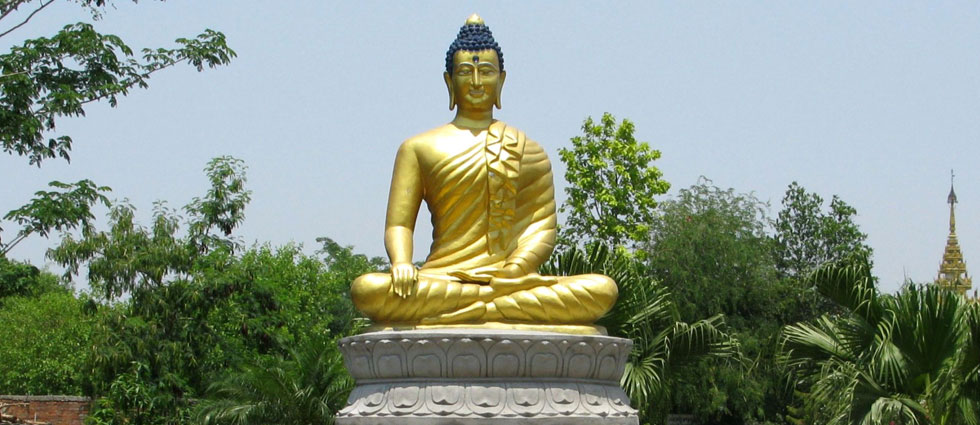
Lumbinī (Nepali and Sanskrit: लुम्बिनी About this sound listen (help·info), "the lovely") is a Buddhist pilgrimage site in the Rupandehi District of Nepal. It is the place where, according to Buddhist tradition, Queen Mayadevi gave birth to Siddhartha Gautama in 563 BCE. Gautama, who achieved Enlightenment some time around 528 BCE, became the Gautama Buddha and founded Buddhism. Lumbini is one of many magnets for pilgrimage that sprang up in places pivotal to the life of Gautama Buddha.
Lumbini has a number of temples, including the Mayadevi Temple and several others which are still under construction. Many monuments, monasteries and a museum — the Lumbini International Research Institute — are also located within the holy site. Also located there is the Puskarini or Holy Pond where the Buddha's mother took the ritual dip prior to his birth and where he, too, had his first bath. At other sites near Lumbini, earlier Buddhas were, according to tradition, born, achieved ultimate Enlightenment and finally relinquished their earthly forms.
Lumbini was granted World Heritage status by UNESCO in 1997.

In the Buddha's time, Lumbini was situated between Kapilavastu and Devadaha (both in Nepal). It was there, that the Buddha was born. A pillar now marks the spot of Ashoka's visit to Lumbini. According to an inscription on the pillar, it was placed there by the people then in charge of the park to commemorate Ashoka's visit and gifts. The park was previously known as Rummindei, two miles (3.2 km) north of Bhagavanpura.
In the Sutta Nipáta (vs. 683) it is stated that the Buddha was born in a village of the Sákyans in the Lumbineyya Janapada. The Buddha stayed in Lumbinívana during his visit to Devadaha and there preached the Devadaha.
Lumbini is a 8-hour drive from Kathmandu and a 30-minute drive from Bhairahawa. The closest airport is Gautam Buddha Airport at Bhairahawa, with flights to and from Kathmandu.

No comments:
Post a Comment